
A droopy eyelid can indicate a muscular problem or nerve damage and you should see an eye specialist.
Author Archives: Editor
Double vision
This can be an indication of nerve damage and you should consult a doctor immediately.
Clinica Dr Jose Valdai de Souza – Brasil
www.clinicavaldai.combr
Porto Alegre
Av. Carlos Gomes 328 cj.501
T/F: 51 3228 4928
51 3328 9517
Osario
Av. Jorge Dariva 1427
CEP 95520-000
Osorio
T/F: 51 663 3488
51 663 3418
Interesting Elixir companies
The health, pharmaceutical and cosmetics sectors offer a vast array of opportunities for investors. Scientists are making discoveries that save countless lives and eradicate ageing diseases. These opportunites are being commercially exploited by the pharmaceutical and cosmetic industries. ElixirNews believes that since you, the consumer, are spending your hard-earned cash in this sector that you should also know about the possibilities for investing and getting your money back. We will therefore be reporting on companies of interest in this sector.
We are not investment advisors and are not giving investment advice. You should consult a qualified professional investment broker for their guidance and advice.
Blurred vision
Could be a sign of glaucoma, a serious eye disorder in which excess fluid causes increased pressure in the eye or iris, causing inflammation. If you have glaucoma, you will need drugs to reduce the pressure in the eye.
Bloodshot
Can be caused by a number of factors including irritation by cosmetics or pollution, fatigue, eye strain, poor diet, vitamin B deficiency or an excess of alcohol.
Blephartis (Itchy, red eyelids)
Blephartis, inflammation and scaling of the lid margins, is often linked to dandruff. If you do have dandruff, using an antifungal shampoo may help clear up both conditions. Using an unperfumed moisturising cream on your eyelids may also help. If the condition does not improve, your doctor may prescribe a corticosteroid eye ointment.
Eye Health
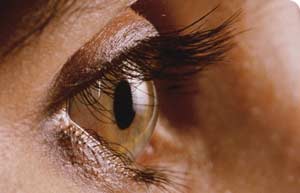
Eyes reveal the state of your general health. They are also one of the first parts of the body to show visible signs of ageing, or a lack of sleep or stress. The skin around the eyes is five times thinner than on the rest of your face and the eyes have to move 10,000 times a day using an incredible 14 muscles per blink. The first sign of ageing of the eye itself is presbyopia, when the eye begins to loose its elasticity, and near sight is affected. Although currently there is little that can be done other than wearing glasses there is evidence that suggests good nutrition, particularly antioxidents, can prevent and/or delay some conditions such as cataracts, age-related macular degeneration and glaucoma.
Among the anti-ageing antioxidents for the eye are vitamin C, E, the carotenoids – lutein and zeaxanthin (spinach) and ginkgo biloba. As with other areas of health you should eat lots of fresh foods and oil-rich fish, exercise, do not smoke as it takes nutrients from the body and affects the circulation. Blue green algae, high in beta-carotene, can also help. Some drugs may affect eye health and problems can be as a result of illness such as diabetes or glaucoma and it is therefore essential to have regular check-ups with a doctor.
Breasts
Enhancement
According to the British Association of Aesthetic Plastic Surgeons (BAAPS), breast enlargement/enhancement is the most popular cosmetic surgery treatment in the UK.
This operation, known as breast “augmentation” in which a silicone or saline implant is inserted behind the breast, either from the crease under the breast or under the armpit, so scars are hidden. Implants do not usually interfere with breast-feeding. Surgery takes about one and a half hours and is performed under a general anaesthetic.
There has been some controversy in the past over the use of silicone, suggesting they may be responsible for increasing the risk of breast cancer or auto-immune disorders.
The implant can be filled with Saline (water), or a silicone gel, which is thicker and firmer than previous versions offering better shape and prevention of leaks and rupture.
There are a variety of implant designs and shapes, sizes and textures which you should discuss with your surgeon. Most women tend to opt for an implant that goes up one or two cup sizes.
The operation is performed in a hospital under general anaesthetic. An incision is made, usually in the crease of the breast, the armpit or the lower edge of the areola. The implant is placed under the chest muscle or directly under the breast tissue, depending on personal preferences or other considerations such as breast feeding.
There may be some pain for which painkillers are presribed and a hospital stay of one or two nights. The stitches will remain in place for about seven days and you will be required to wear a full support bra 24 hours a day. You will also get a better outcome if you avoid strenuous exercise including aerobics for one month.
Uplift
Breasts which are not necessarily too big, but have stretched due to ageing or childbirth or breast feeding. The operation, known as “mastopexy” lifts up the breasts but does not change their size, altough it can be combined with a breast reduction or augmentation. The mammary gland is rolled up, almost like a sheet of fabric into a cone shape. The skin is then re-draped over the newly shaped gland. The operation takes up to two hours, under a general anaesthetic. Bandages and stitches are removed after a week, but the operation does leave a scar.
Reduction
Overally large or heavy breasts can not only look out of place but can also cause related problems such as sore shoulders, back pain and poor posture. It is a major operation because in some cases the breasts will need to be reduced by several sizes. Surgery can take several hours under a general anaesthetic.
The breasts are marked with the areas to be reduced and the required shape and size. The nipple is usually removed during surgery and a cut made down and under the breast, so that the surplus tissue can be removed. The nipple is replaced and the wounds are closed. The majority of the work is concealed around the edge of the nipple or under the breast so there should be minimal visable scarring.
As with other breast surgery, strenuous exercise must be avoided and a support bra worn during the recovery period.
Accessibility Statement
This site was designed to be accessible. While every effort has been made to ensure that is usable for the widest possible audience, we’d really appreciate your feedback, particularly if you have encountered issues when using the site.
Shortcuts are accessed by holding down the Alt key (PC) or Control key (Mac) and the associated key from the list below. Some browsers require you to press enter to confirm your selection. Once on a page, use the ‘tab’ key on your keyboard to move between the links, and use the ‘enter’ key to activate a link.
h Home page
a Accessibility
s Skip to content (non visual browsers and Netscape 4 and lower)
f Search
c Contact
Increasing Text Size in the browser
The size of the text on pages on the site can be increased if necessary. This table outlines how to increase the font size in a selection of popular browsers. If your browser is not on the list, please consult the online help provided with your browser.
PC
MS Internet Explorer 5+: View menu > Text Size
MS Internet Explorer 3 and 4: View menu > Fonts
MS Internet Explorer 4.5 Mac: View menu > Text size
Mozilla Firefox: Ctrl and + or –
Netscape 6+: Ctrl and + or –
Netscape 4: Ctrl and [ or ]
Netscape 3: Options > General Preferences > Fonts > Choose Font
Mac
MS Internet Explorer: View menu > Text Zoom
Netscape 6+: View menu > Text zoom
Netscape 4: Command and Shift [ or ]
If you have any issues using the site, please let us know and we’ll endeavour to rectify them as quickly as possible.
A note to users of older browsers (Netscape 4, Internet Explorer 3):
For best results, please use Mozilla Firefox, Opera, Internet Explorer 5 or higher, or Netscape 6 or higher. If you are using an older browser, we recommend that you upgrade.
About Elixir
Avril O’Connor is the Editor of Elixir News and Elixir magazine. It has been developed from a passion which began in 2002 when there was a proliferation of web sites selling anti-ageing products and services….but few with an independent voice.
In April 2005 Elixir News was born. It is editorially independent enabling consumers to better make informed choices about their health and anti-ageing products and services.
We do not accept payment to write endorsements of products and services or for the inclusion of experts and services in our directories. This enables Elixir News to be a credible and independent news source, as well as including all the services and professional experts that we consider relevant to our readership. Nevertheless inclusion is not an endorsement by us and should it come to our attention that any business mentioned on our site is being conducted in an illegal or unethical manner we will remove it from our directories.
Visitors to our site should also bear in mind that many claims are made for anti-ageing products and services that are not necessarily substantiated by scientific evidence and should always take the expert advice of a qualified medical doctor.
It is the intention of Elixir News to fairly report and investigate the facts. If we consider that any claims for products/services are bogus or unsubstantiated we will say so. If you have had negative experiences with businesses in this sector please let us know and we will take up the challenge. We also report on our positive experiences with products and services. Advertising or sponsorship is clearly labelled as such.
We hope that you will find our web site useful in arming you with knowledge that can help you live a longer and happier life. But once again we do advise anyone with persistent health problems to consult a qualified medical practitioner/doctor. Anyone embarking on a intensive anti-ageing programme should, in particular, seek the advice of a qualified specialist about the supplements they plan to take and in what quantities, as they may conflict with drug therapy and certain medical conditions. The doctor may advise certain blood and other tests to determine your individual needs.
Please do let us know about your experiences and feedback on the information within this site. Email us at info@elixirnews.com
Chin
Plastic surgery used to correct a small or receding chin is called “mentoplasty”. The jawbone can be built up, using implants, to achieve the desired effect. Traditionally these have been made of silicone, but now newer and better materials are being introduced from dental surgery ie polymers and HTR. Silicone implants are inserted from inside the mouth and sliped down to lie over the chin, so there is no scar. The new type of implants are inserted from below the chin and physically attached to the bone, eventually fusing with the jawbone. The scar is hidden under the jaw.
In both cases the operation takes less than two hours and is always done under general anaesthetic. Stiches are removed after a week. Swelling should have gone down by then, and any bruising should fade over the next three to four weeks. Since the implant is not fixed in place it may move, requiring a second operation.
There is also an operation known as “genioplasty” in which the surgeon cuts into the bone and repositions the sections using a plate. Temporary numbness of the lower lip is common and, on occasionally permenant. In rare cases, infection occurs necessitating antibiotics or even a second operation. Any post-operative pain can be controlled by painkillers. A hospital stay of one night is usually required.
Ears
Known as “otoplasty”. The usual problem is protruding ears. The ears can be altered reasonably easily and, for adults, a local anaesthetic can be used, injected around the ears to make them numb. An incision is then made in the crease behind the ear and the cartilage is trimmed, bringing the ear closer to the head. The operation lasts less than an hour. Children can have this operation under general anaesthetic from the age of seven, which is when the ears stop growing. It’s a straightforward procedure.The ears which will be swollen and bruised, are bandaged after the operation, and these must be kept on for the first 24-48 hours at least. After this, most patients will have to wear a bandage only at night for the next few weeks and sleep on their backs during this period. The scars, which are hidden behind the ears, should eventually fade.
Nose
This operation is known as “rhinoplasty”. Many people are unhappy with noses that have bumps on the nasel bone, are too broad or have long tips, or that have been broken at some stage.
In this operation the nose is reshaped and realigned to bring it into better proportion with the rest of the race. This mayincludes removing bumps, slimming an overly broad nose or altering the tip. Some procedures may involve breaking the nasal bone and resetting it. Work on the tip of the nose, where the supporting tissue is cartilage rather than bone – may be more complex but will not involve breaking the bone. The operation lasts approximately one hour, and is usually done under a general anaesthetic.
The plaster splint which protects the area operated upon is removed after about one week, at which time the surgeon should check that the nose is shaping up as expected.
The amount of facial swelling and bruising can vary depending on the complexity of the operation and on the sensitivity of the individual – from black eyes and considerable swelling to very little. A cartilage-only operation is less traumatic and should cause less reaction. However, swelling recedes fairly quickly and usually disappears after two weeks.
Some slight residual swelling, and a feeling of stuffiness, might take another four weeks to disappear. A big plus of this operation is that there is no scar, as the procedure is performed within the nasal cavity. You may be advised to avoid blowing your nose for a while after the operation. Breathing through the mouth is necessary for a few days afterwards. Some people find this uncomfortable as it leaves the mouth feeling dry, but a constant supply of cold and warm drinks helps.
Always see a doctor
The information provided on this site is for information only and is not intended as a substitute for the advice of a qualified medical doctor. You should not use the information on this site for diagnosis or treatment of any health problem or for prescription of any medication or other treatment. You should also seek the advice of a doctor before starting any diet, exercise or supplementation regime, before taking any precription drugs or if you have or suspect you might have a health problem. You should not stop taking medication prescribed by a doctor without first consulting him/her first.
Eyes
Eyelid surgery is known as “upper” or “lower blepharoplasty”. This is one of the most popular cosmetic operations as the skin around the eyes is thinner than on the rest of the face and is usually the first to show signs of ageing. On the upper-eyelid the skin can stetch which can lead to a hooded effect and even – in extreme cases – loss of peripheral vision.
The other problem is bags under the eyes, which are created by an accumulation of fatty tissue underneath, together with a loss of elasticiy in the skin. Some people are affected by both bags and sagging upper eyelids, others by just one or the other. Sometimes bags under the eyes are hereditary rather than a sign of aging, in which case a corrective operation can be performed on someone in their twenties.
The operation:
In the case of the upper lid the excess skin can be trimmed and removed and stitched back in place in what is a reasonably straightforward operation. It can be performed under general or local anaesthetic. Luckily the scar can be created in the crease and is therefore undetectable afterwards. The operation can also be carried out from inside the eyelid. Bags under the eyes can be treated at the same time. With the lower lid, the fat is removed through an incision made close to the lash line and he skin is lifted and stitched back into place. Surgery lasts about one hour and can be done under a local or general anaesthetic.
Stitches are removed from three to five days. The bruising and swelling lasts for seven to 10 days, and the eyes may be watery. The patient’s appearance is back to normal after 15 to 30 days. Eye make-up can be worn by week two, and contact lenses by week three. The scars are minimal, and after two or three months become practically invisible, hidden just beneath the lash lines on lower eyelids and in the natural crease on the upper lids. With lower lids, some surgeons make the incision from inside the lid so there is no visible scarring at all.
These operations are fairly simple, and predictable in their outcome. However, they will not remove the shadows under the eyes, or the crow’s feet wrinkles at the side of the eyes. It will also only remove the wrinkles that are within the skin that is removed. Laser surgery which can be done at the same time can remove other wrinkles. Otherwise a face-lift may be more suitable.
There is no limit to the age at which you can have a blepharoplasty, and many surgeons work on patients in their seventies or older, especially in cases where drooping eyelids leads to problems with vision. Healing is slower in the older patient and could take up to a month.
Autogenics
Autogenics is a relaxation tehnique, similar to self-hypnosis, which uses a series of exercises to aid relaxation. Clients are taught to put themselves into a relaxed state without the aid of a therapist.
Information:
The British Associatin for Autogenic Training and Therapy
Royal London Homeopathic Hospital
NHS Trust
Great Ormond Street
London WC1N3HR, UK
Tel:+44(0)20 7837 8833
Aura Imaging
Practitioners believe that the human body emits an aura that can reveal both emotional and physical health. A therapist uses special equipment to read the aura. Available through natural health clinics.
Art Therapy
This therapy combines a number of arts – music, dance, movement and painting – to help those with self-expression problems. It can be helpful to those with mental or physical conditions such alcoholism, drug addiction, and depression.
Dr Karlis Ullis MD – Santa Monica

Dr Karlis Ullis MD
The Sports Medicine & Anti-Aging Medical Group
1807 Wilshire Blvd
Santa Monica
California 90403
T: 310 829 1990
F: 310 829 5134
www.agingprevent.com
Dr Karlis Ullis MD is an internally recognised authority on anti-ageing medicine and sports medicine. He is the author of “Age Right” (Simon & Schuster, 1999), a ground-breaking book on practical, easy to use anti-ageing inventions for the consumer. He first began developing his theories on anti-ageing medicine while at UCLA where he worked with some of the world’s greatest athletes, including Olympic Gold Medalist Gail Deevers, Jackie Joyner Kersee, Mike Powell and “Flo Jo” Joyner and NBA star Reggie Miller. When he began applying these anti-ageing techniques to patients in his private practice the results were startling: middle-aged men and women who had accepted decline in their health as a fact of life were revitalised.
Dr Ullis is also the author of “Super T” (Fireside/Simon&Schuster 1999) which explains how testosterone is the fuel for energy and sex and “The Hormone Revolution Diet” (Avery Press, 2003).
His clinic, The Sports and Anti-Aging Medical Group utilises the latest in scientific evaluation tools. Customised programmes are developed for each patient. Tests include blood and urine oxidative DNA damage ageing tests, early cancer detection panels, vitamins, antioxidents and trace minerals are measured. Total body scans to detect early atherosclerosis, coronary artery disease and early cancer detection.
Dr Ullis also acts as a consultant to Sly Stallone’s nutrient company – www.instonenutrition.com
Aloha Medical Center – Hawaii
Aloha Medical Center, 460 Ena Road, Suite 603, Waikiki
808-732-0888
Aloha Medical Center
460 Ena Road, Suite 603
Honolulu, Hawaii 96815
(808) 732-0888
Aloha Medical Center is a physician-directed center, which offers growth hormone replacement, hyperbaric oxygen, intravenous (IV) nutrition therapy, and many other anti-aging therapies.
HGH Technology
Somatotropin, the medical name for Human Growth Hormone, is produced in the laboratory using technology that copies the natural growth hormone molecule. It produces a 100% physically, chemically, and biologically identical molecule to the HGH produced by the pituitary gland. This technology is known as recombinant DNA technology.
HGH is a FDA-Approved Drug
In August, 1996, the FDA approved Human Growth Hormone for use in adult patients for the first time. Before this approval, it was only authorized for use to promote growth in shortstatured children with HGH deficiencies. Now HGH can be prescribed for hormone-deficient adults as well as to delay the aging process. Restoring the body with youthful hormone levels is an important key to living a stronger, healthier, and happier life.
Injectable HGH versus Oral HGH
As HGH is a large and complex protein, it is not absorbed intact and must be taken by injection. If HGH were taken by mouth it would be digested in the stomach and become inactivated. Injection of the Human Growth Hormone bypasses the digestive system completely. This injectable HGH requires a prescription.
Signs of Human Growth Hormone Deficiency
The psychological and emotional symptoms of HGH deficiency include a reduced sense of well being, low energy, low vitality, decreased capacity for work, and emotional lability, which encompasses mood swings, anxiety, depression, and increased social isolation. Important physical signs include increased body fat, especially around the waist (apple-shaped rather than pear shaped), decrease in muscle mass, and thin, wrinkled, or prematurely aged skin. Other symptoms may consist of the following: reduced cardiac performance, poor sleep, decreased muscle mass and strength, and little to no sex drive.
Aging Process
Aging takes place at a more rapid pace when your hormone levels start to decrease. Once the hormone levels begin dropping, your body starts to change. You tend to gain weight easier, youre not as athletic, you tend to be more uptight about things, and youre depressed more frequently. These are all signs that your hormone levels are getting lower. Natural hormones are protective of normal bodily functions, and aging is related to the loss of these hormones. Replacing the hormone level to youthful levels delays the aging process. HGH is said to be the Fountain of Youth.
FAQ
Q. How do I get started?
A. Follow the directions on www.HGHPharm.com
Q. How long will it take before I start to see some results?
A. You can start to see and feel results as early as one week. Sometimes a little longer. The longer you are on this type of therapy the better your chances of seeing and feeling more benefits.
Q. How do I know if this therapy is right for you?
A. We are networked with certain diagnostic laboratories in Hawaii and the mainland. These laboratories handle and perform all of the required blood tests to determine where your hormone levels are and where they should be.
Q. How do I get my prescription?
A. Once we receive your laboratory test results, one of our physicians will review that information along with the information collected from the initial history and physical evaluation. If appropriate, a course of HGH can then be prescribed and initiated.
Q. How long does this process take?
A. It will take about a week and a half: this will allow time to have the blood tests performed and have the test results sent back to us.
Q. Where do I get my HGH?
A. Follow the directions on www.HGHPharm.com
NOTE: Human Growth Hormone is available only by prescription and regulated by the Federal Food and Drug Association. In order for our physicians to prescribe HGH to you they must establish a doctor-patient relationship with you. This is to make sure the therapy chosen is right for you.
The medical procedure is called Lipo-Lyte. A special mixture of purified lecithin, vitamins and nutrients is injected into the fatty areas, like the saddle bags, love handles and arm flab. These injections work by triggering fat dissolving enzymes responsible for breaking down and dissolving fat, as well as for slimming and smoothing the skin.
The Lipo-Lyte Injection system, available in Europe and the mainland for years, is now available in Hawaii.
How it works: Phosphatidyl choline (lecithin) and a special mixture of other natural vitamins and nutrients are injected into the fatty areas, like the buttocks, thighs or love handles and work by triggering enzymes responsible for breaking down and dissolving fat, as well as for slimming and smoothing the skin.
What areas can be treated ?
Lipo-Lite is not a replacement for liposuction because, so far, it has only been used on small amounts of fat. It is perfect for the person who wants to lose that last 5 pounds on the thighs, love handles, sagging stomach, the underarm flab, or those fat pads under the eyes.
Acetyl L Carnitine
Acetyl-L-carnitine, an amino acid, is one of the most extensively researched nutrients and credited with aiding brain function. It is believed to work by increasing the levels of important neurotransmitter chemicals essential for memory, focus and learning. It has also been shown to reverse damage to brain cells brought about by poor nutrition and even alcohol abuse.
Acetyl-L-carnitine is a natural component of the brain’s chemistry but levels decline in age and also through external factors such as pollution. The only natural source is bovine so a synthetic form, derived from amino acids, is recommended.
A number of studies of acetyl-L-carnitine have shown that it slows or prevents age-related decline in mental function, depression, assists recovery in stroke victims and Alzheimer’s. It may also be of benefit in the management of Parkinson’s disease, damaged nerves and diabetes. Patients with brain injuries report that a combination of acetyl-L-carnitine with phosphatidyl serine, significantly improves their overall brain function, attention span and learning ability. Acetyl-L-carnitine has also been found helpful in the management of diabetes especially when combined with lipoic acid and GLA.
It also has a role as a powerful immune enhancer. This is due to its ability to promote the health of the nervous system, which in turn governs the activity of the immune system. Acetyl-L-carnitine may offer specific benefit to HIV patients and those with tuberculosis. Another attibute is that the benefits are almost immediate.Its effects are enhanced by taking it in combination with hosphatidly serine, B vitamins, phosphatidly choline and EPA/DHA (fish oils).
Read: The Carnitine Miracle by Robert Crayhon.
Side effects: There are no known side effects this is believed to be because acetyl-L-carnitine is a nutrient already manufactued by the body to protect and regenerate the brain. It should not be taken after 5pm as it is a stimulant.
General Advice
Warning: Certain supplements and hormones may pose health risks for some individuals. You should also be aware that many claims for health and anti-ageing products are not always substantiated by medical evidence and/or long-term studies. Always take the advice of a qualified medical practitioner/doctor, particularly if you have persistent systoms.
Care should be taken not to take high doses of some vitamins and supplements, particularly Vitamins A and D which are stored by the body and can be toxic in large amounts. The Recommended Daily Allowance (RDA ) or Reference Daily Intake (RDI) varies (although the US/UK recommendations are similar ) but does not take into account, gender, age, current state of health or environmental factors. For this reason Elixir News does not state these doses. It is therefore wise to consult a doctor or nutrionist rather than rely on RDA or manufacturers guidelines.
Taking more than 1,000 mg of vitamin C a day, for example, could cause diarrhoea, while high intakes of calcium (above 1,500 mg a day) and iron (above 17mg a day) may result in similar symptoms in some people. Vitamin B3 (nicotinic acid) may cause facial flushing if taken at high doses, while excess zinc can reduce copper absorption, leading to anaemia. While many women take doses of around 100mg of vitamin B6 to ease PMT symptoms, high levels could cause nerve damage. Such damage has only been noticed at 1,000mg, but the US’s FDA recommends people take no more than 10mg a day. Similarly with minerals care should be taken not to exceed recommended doeses. There are also concerns over the mineral chromium picolinate as it has been linked to cancer.
Where we know about concerns over a supplement or where it has been banned outright we will post these details on our banned/redlight section. You should also reassure youself that the supplements you buy are of the highest quality.
The advice of a specialist doctor should be sought for guidance on the right supplements for you. A doctor may advise various blood tests to determine these -see AntiAgeing Tests.
Aromatheraphy
Highly-concentrated oils from spices and plants are combined with a carrier oil usually almond, and used to massage or inhaled to give relief from all kinds of ailments from coughs and colds to stress and breathing problems, as well as chronic fatigue, back pain and menstral complaints.
The essential oils, usually in a combination, are massaged into the body with light strokes or inhaled in steam, depending on the condition to be treated. The oils are absorbed by the body and enter the bloodstream – which is why pregnant woman and anyone with diabetes, epilepsy and heart problems should consult their doctor prior to any treatment. Each oil may have several therapeutic uses. For instance lavender and thyme can be combined to reduce inflammation:lemon oil is an antiseptic and anti-inflammatory. See guide to oils.
Information:
The International Society of professional Aromatherapists
82 Ashby Road
Hinkley
Leicestershire LE1U 1SN. UK
Tel: ++ 44(0)1455 637987
www.ifparoma.org
email: admin@ifparoma.org
Also Aromatherapy Council
PO Box 355
Croydon, Surrey CR9 2PQ. UK.
Te: ++44 (0)20 8251 7912
Alexander Technique
An exercise method designed to re-educate posture and balance. The patient is encouraged to use special movements while carrying out everyday activities such as sitting, lying down, standing, walking lifting. The patient focuses on the way he/she moves so that day-to-day physical activity can be carried out with minimum strain. It treats musculo-skeletal problems, back pain and repetitive strain injury. It can also assist with emotional discorders.
Further information from:
Society of Teachers of the Alexander Technique
1st Floor
39-51 Highgate Road
London NW5 1RS. UK
Tel: ++ 44 (0)845 230 7828
Fax: ++ 44 (0)207 482 5435