Exercise may protect against Alzheimer’s

Stockholm: Exercising at least twice weekly in middle age can help prevent the congitive brain disease, such as Alzheimer’s and dementia.

Researchers at the Ageing Research Centre at the Karolinksa Institute in Stockholm have discovered that people in their late 40s and early 50s could cut their risk of developing these diseases by about 50 per cent simply by becoming more active, according to a study.

Dr Miia Kivipelto, of the Ageing Research Centre at the Karolinska Institute in Stockholm, said: ‘If an individual adopts an active lifestyle in youth and at mid-life, this may increase their probabilityof enjoying both physically and cognitively vital years in their life.’

The study, published in the medical journal The Lancet Neurology, involved nearly 1,500 men and women, of whom nearly 200 developed dementia or Alzheimer’s between the ages of 65 and 79.

The researchers looked back at how physically active the volunteers had been up to 21 years earlier, when they would have been in middle-age.
Those who developed Alzheimer’s or another form of dementia were far less likely to have been active in midlife than those who remained free of dementia.

The minimum amount of exercise that appeared to be protective was physical activity that lasted 20-30 minutes at least twice a week and which was enough to cause breathlessness and sweating.

Dr Kivipelto said that regular physical exercise might protect against dementia by keeping the small blood vessels of the brain healthy.

It could also help prevent conditions such as diabetes and high blood pressure which make people more vulnerable to Alzheimer’s.

Other research has shown that mentally demanding jobs and everyday stimulating activities such as chatting on the phone, watching television or listening to the radio help to keep people mentally alert because it involves information processing.

This may help maintain a ‘reserve’ of brain cells that resists the effects of Alzheimer’s disease.

Eating grapes lowers risk of breast cancer

Lausanne: Scientists have discovered that eating grapes, which contain an anti-oxidant called reservatrol, could half the risk of breast cancer.

A study of 369 women suffering from breast cancer were compared with another healthy group by experts at the University of Social and Preventative Medicine in Lausanne over a period of ten years. they confirmed that those who ate the highest quantity of grapes were half as likely to developed a tumour than those who rarely ate them.

Reservatrol contains polyphenol, a chemical that is thought to protect against heart disease and cancer and works by preventing inflammation.

Obesity drug goes on sale in shops

London: Xenical, an obesity drug previously only prescribed to patients by a doctor, is to go on sale at branches of Botts, the chemist.

Although Boots says it will carry out detailed patient screening GPs expressed serious concerns about the scheme as the shop would not have all the information.

Xenical, also known as Orlistat, inhibits the absorption of fat in the intestine so the body excretes it instead. Users must stick to a low-fat diet, or face unpleasant side effects, including loss of bowel control.

It will be available at 100 branches of Boots across the country. Patients will have to enrol in the company’s weight loss programme, which costs £10 a week. They must also be classed as obese – defined as a body mass index of 30 more. As well as being able to get Xenical, they will also be advised on nutrition and how to increase their activity levels. Blood pressure and glucose levels would also be measured before they receive the medication.

Pergolide

Pergolide

Is used in the treatment of Parkinson’s Disease and also restless leg syndrome. It works as a substitute for dopamine, a natural brain chemical need to control movement and which fails to function properly in Parkinson sufferers.

There are concerns that this drug may be linked to problems with the aortic valve in the heart.

Dr Neil Hughes – UK September 2005

A GP branded a “sexual octopus” by a female patient has been found guilty of serious professional misconduct.

Dr Neil Hughes sent “indecent and inappropriate” text messages to the patient, Miss A, the General Medical Council (GMC) concluded.

Miss A, 33, from Liverpool, first went to see Dr Hughes at a diet clinic in Burnley in January 1998.

The GMC rejected Miss A’s sexual claims and said Dr Hughes, of Bramhall, Stockport, would not be struck off. It accepted the relationship he had with his patient was not “of a sexual nature”.

The GMC gave the married GP a reprimand and warned him not to repeat his behaviour.

Dr Hughes had denied any sexual behaviour but admitted swapping mobile phone numbers with the patient and sending her text messages.

The doctor apologised for his behaviour and the GMC concluded his it was at the “lower end of the spectrum” of misconduct.

It did not consider him a risk to patients.

Pomegranates are good for the heart, says new study

Los Angeles: Pomegranate juice is bursting with antioxidants which are good for the heart, scientists at the University of California have found.

The juice contains as many antioxidants as two glasses of red wine or ten glasses of green tea. It also contains vitamins A, C and E, and folic acid.

In the study doctors gave volunteers with heart disease, caused by fat, a 240ml glass of pomegranate juice a day. A second group was given a similarly coloured and flavoured placebo drink.

After three months, the pomegranate drinkers experienced a 17 per cent increase in blood flow to the heart. In the placebo group blood flow had worsened by around 18 per cent.

As a result those who drank the pomegranate juice were 35 per cent better off overall, according to a report about the study in the American Journal of Cardiology.

Dr Dean Ornish, of the University of California, who led the study, said: ‘The significant improvements in blood flow to the heart observed after only three months suggest that pomegranate juice may have important clinical benefits in those with coronary heart disease. Also, it may help to prevent it.’

The pomegranate originated in the region from Iran to the Himalayas in northern India. It has been cultivated across the entire Mediterranean since ancient times.

Today it is widely grown throughout India and the drier parts of southeast Asia, Malaysia and tropical-Africa. One of the world’s oldest fruits, the pomegranate has been a symbol of fertility, death and eternity.

Chubby children heart risk

London:Obesity in childhood may lead to heart disease in later life, according to research carried out by doctors at St George’s Hosital Medical School in London.

Even children who are not medically overweight, just chubby, are carrying extra fat which stiffens their arteries – an early sign of heart disease.

The doctors found that fatter children in their early teens had less elastic blood vessels.

Women can expect to live to 89

London: Women in the UK aged 65 today can expect to live until 89 as a result of improvements in life expectancy, says a report from the insurance actuarial profession.

The figures also reveal that men of the same age will on average reach their 86th birthday. Life expectancy figures are expected to continue to improve with men aged 65 in 2015 living until they are 90 and women until 93. Longevity is improving as a result of improved medical treatment for killer diseases such as cancer.

Whilst this is good news, state and private pension systems in most western countries are already suffering from the burden of a growing ageing population and poor investment returns. In the UK the Government is attempting to raise the age of retirement.

The figures, from the Continuous Mortality Investigation, suggests the life expectancy of today’s 65-yearold men is three-and-a-half years longer than in 1994, when the last study was conducted by the CMI. They questioned savers who are more likely to be middle-class and better off financially.

Official figures put life expectancy lower because they take data from all social groups. The latest Government figures show a girl born in 2002 can expect to live until 80. A boy born in the same year can expect to live until 76.

UN expert warns flu pandemic could kill millions

New York: More than 150 million people worldwide could be killed by a flu pandemic, warns the United Nations.

Dr David Nabarro, a UN public health expert said the outbreak would be a mutation of the bird flu which has hit Asia.

In 1968 a flu pandemic claimed up to four million lives worldwide. But the new pandemic which could hit at any time could prove fatal to anywhere between five million or 150 million people worldwide.

Dr Nabarro, the new UN co-ordinator for avian and human influenza, called on governments to take immediate steps to address the threat.

‘We expect the next influenza pandemic to come at any time now, and it’s likely to be caused by a mutant of the virus that is currently causing bird flu in Asia,’ he told a news conference to mark his appointment.

‘The avian flu epidemic has to be controlled if we are to prevent a human influenza pandemic.’

The H5N1 strain of bird flu has been spreading through poultry populations in Asia since 2003. So far tens of millions of birds have died and it has killed at least 65 people, mostly poultry workers. The virus does not pass easily from person to person but the fear is that it could mutate to create a virulent new strain in humans.

A previous influenza pandemic in 1918 killed more than 40million people. Subsequent outbreaks in 1957 and 1968 originated from avian flu viruses combined with human viruses.

The first case of what was known as Hong Kong flu was confirmed in Britain in January 1969, by which time doctors and chemists said they no longer had any vaccine to prevent it.

Dr Nabarro said the UN was coordinating a response to the new threat after Asian leaders sought help from Secretary-General Kofi Annan at the recent UN summit.

‘I believe the work we’re doing over the next few months on prevention and preparedness will make the difference between, for example, whether the next pandemic leads us in the direction of 150million or in the direction of 5million,’ he said.

Bird flu has not yet reached Europe but it was found in birds in Russia last month.
Experts fear that, should it mutate, international travel will allow it to sweep rapidly around the globe. The drug Tamiflu has proved effective in treating bird flu but supplies are low in many countries.

Britain’s top flu expert, Professor John Oxford of Queen Mary’s School of Medicine, said that washing hands remains one of the best defences against flu.

Ultra sound used to break down fat

Tel Aviv: Doctors in Israel have invented a machine that breaks down excess body fat using ultra sound.

Treatment takes around two hours and costs around $1,400 and is already being used by patients.

High frequency ultrasound waves are aimed at the part of the body required and break down the fat cells without damaging other parts of the body. The broken down fat is reabsorbed by the body.

The device is manufactured by ultrascane, and was successfully tested on pigs before being used on humans.

Left handedness may be linked to increased risk of breast cancer

Utrecht:Left handedness may be linked to an increased risk of breast cancer, finds new research published online by the British Medical Journal today.

Researchers at the Julius Center for Health Sciences and Primary Care, University Medical Center Utrecht,examined the relation between handedness and incidence of breast cancer in over 12,000 healthy, middle aged women born between 1932 and 1941.

Body measurements were taken and risk factors such as social and economic status, smoking habits, family history of breast cancer, and reproductive history were recorded.

They found that left handed women were more than twice as likely to develop premenopausal breast cancer as non-left handed women. Adjusting for risk factors hardly affected the overall association.

The origin of the association may lie in exposure to high levels of sex hormones before birth, which can induce left handedness as well as changes in breast tissue, say the authors.

“Although the underlying mechanisms remain elusive, our results support the hypothesis that left handedness is related to increased risk of breast cancer,” they conclude.

Contact:
Cuno Uiterwaal, Assistant Professor of Clinical Epidemiology, Julius Center for Health Sciences and Primary Care, University Medical Center Utrecht, Netherlands
Tel: +31 (0)30 250 9369 or +31 (0)30 250 9358
Mobile: +31 06 498 425 25
Email: c.s.p.uiterwaal@umcutrecht.nl

Just one to four cigarettes daily triples risk of dying of heart disease or lung cancer

Oslo: Smoking just one to four cigarettes a day almost triples a smoker’s risk of heart disease and lung cancer, reveals a large study in Tobacco Control.

The impact is stronger for women, the study shows, and quashes the cherished notion that “light” smokers escape the serious health problems faced by heavier smokers.

The research, carried out by the National Health Screening Service and the Institute of Public Health, tracked the health and death rates of almost 43,000 men and women from the mid 1970s up to 2002. All the participants were aged between 35 and 49 at the start of the study, when they were screened for cardiovascular disease and diabetes.

Although a significant proportion of the light smokers increased their daily consumption, this had not exceeded 9 cigarettes a day. And almost as many had given up as had increased their consumption.

Taking account of risk factors likely to influence the findings, the data nevertheless showed that light smoking endangered health. The steepest risk occurred between nought and four cigarettes a day.

Compared with those who had never smoked, those who smoked between 1 and 5 cigarettes a day were almost three times as likely to die of coronary artery disease.

While there was little difference in the risk of dying from any type of cancer, this was not the case for lung cancer.

Men who were light smokers were almost three times as likely to be killed by lung cancer. And women were almost five times as likely to die of the disease as their non-smoking peers.

Light smokers also had significantly higher death rates from all causes – 1.5 times – than those who had never smoked, with the death rates corresponding to the number of cigarettes smoked every day.

As the light smokers had smoked for fewer years than the heavy smokers, the researchers analysed the projected impact of smoking at this level for five years.

This indicated that the risk of death from coronary artery disease would have been 7% higher, and the risk of lung cancer would have been 47% higher in women.

UK cancer patients denied new drug

London: A new cancer drug that helps cancer suffers to live longer has been launched in the UK. But it will be another two years before the National Institute for Clinical Excellence, which approves drug therapies, will give the go ahead for doctors to prescribe it.

The one-a-day pill gives lung cancer suffers an extra three months of life on average. Tarceva which can be taken at home. In tests, one-year survival rates increased by 43 per cent and there were few side-effects.

It is estimated that 7,500 patients a year could benefit from taking the drug but many will not live long enough to see it win approval for widespread use in the National Health Service.

The leading charity Cancer-BACUP this week criticised NICE for the length of time it takes to approve cancer drugs, of which there are currently 23 in the pipeline.

Doctors are often prepared to prescribe drugs before they get NICE approval but local health trusts often refuse to foot the bill – in the case of Tarceva, £2,000 a month.

NICE blames Government funding cuts of £3.5million for the delays.

The European Medicines Agency has granted a Europewide licence for Tarceva to be used by patients with nonsmall cell lung cancer who have failed on at least one prior chemotherapy treatment. An international trial published in July showed the drug significantly boosted survival rates, as well as reducing symptoms such as breathlessness, pain and coughing.

More than 38,000 cases of lung cancer are diagnosed each year in the UK, with more than 80 per cent of patients dying within the first year of diagnosis.

Coffee is good for health, say experts

New York: A series of reports from scientists are contradiciting the belief that coffee is bad for health.

The studies around the world now confirm that coffee contains tannin and antioxidants which are good for the heart and arteries. Also caffeine previously blamed for affecting health can help reduce the risk of asthma attacks and help improve circulation in the heart.

Other studies have shown that coffee drinkers have a lower risk of developing certain cancers. While yet another study of 60,000 people showed that drinking a cup of coffee a day can almost halve the risk of liver cancer. They also have a reduced risk of colon cancer. And the more coffee you drink, the lower your chance of developing the illness.

Coffee drinkers also have a lower incidence of Parkinson’s disease and type 2 diabetes and there are even some tentative findings that caffeine may help prevent Alzheimer’s disease as well as alcohol-related liver damage.

The drink can keep both gall stones and kidney stones at bay and coffee can even reduce the risk of suicide, according to a study by U.S. researcher Professor Walter Willett.

The Coffee Information Science Centre said the research confirmed the health benefits of the drink what it had known for some time.

Cranberry juice halts flu virus, say Tel Aviv researchers

Tel Aviv: A substance found in cranberries has the ability to stop the flu virus in its tracks, researchers at the University of Tel Aviv have discovered.

It is already known that compounds in the juice are capable of killing bacteria, especially in the mouth and bladder but the anti-viral specialists found that it also stops the flu virus from attaching itself to human cells.

In bladder conditions drinking eight ounces of juice more than doubles protection against infection. And the researchers believe the same may apply to the flu virus

First face transplant to go-ahead

Cleveland: US doctors are to transplant the face of a dead donor onto a patient with disfigurements.

Docotrs at the Cleveland Clinic believe that the treatment has a 50% chance of success and the recipient would have to take anti-rejection drugs for life.

The procedure would involve taking skin and underlying tissues from a dead donor and placing them on the living recipient. Though doctors are not entirely sure how the face will look, computer modelling has revealed that it would not look like the donor of the patient’s original face.

Surgeon Maria Siemionow and her team will interview five men and seven women as potential candidates for the 8-10 hour operation.

Dr Siemionow told Associated Press: “You want to choose patients who are really disfigured, not someone who has a little scar.”

Yet they will have to have enough healthy skin for traditional grafts in case the transplant fails.

They will be told that their face would be removed and replaced with one from a cadaver, matched for tissue type, age, sex and skin colour.

Cancer warning over food colour

London: The UK’s Food Standards Agency has warned that Sunset Yellow (artificial food colouring E110) found in children’s sweets and processed foods, could include a contaminant linked to cancer.

The FSA says that the production process for Sunset Yellow could inadvertently create a second illegal chemical called Sudan 1. An FSA spokesperson said that the levels found were low and would be diluted further in any food product. The FSA has contacted the Indian manufacturer of the colouring, which has agreed to modify its manufacturing process to eliminate the creation of Sudan 1.

Sunset Yellow is used in sweets, chocolate, soft drinks, sauces and pickles. It is also used in curry restaurants. While Sudan 1 is used in industrial products and shoe polish.

Sunset Yellow is thought to trigger allergic reactions such as hives and skin-swelling known as angioedema, gastric problems and vomiting.

Earlier this year thousands of products were withdrawn from UK supermarkets after it was discovered that many foods had been contaminated with Sudan 1 imported from India in chilli powder.

Beans and nuts inhibit cancer, reveals new research

London: A new study suggests that eating a diet rich in beans, nuts and cereals may help prevent cancer because these foods contain an natural compound that inhibits the growth of cancerous tumors.

Scientists at University College London (UCL) said that the substance called inositol pentakisphosphate, which is also found in lentils and peas, could also help researchers develop new therapies against the disease.

Foods particularly rich in the compound include cashews and peanuts and beans such as kidney, pinto and navy beans, the pulse commonly used in baked beans. Beans and nuts that have been cooked are a better source because the heating process generates more InsP5 as it breaks down other compounds.

Marco Falasca, of the UCL Sackler Institute, said the discovery was particularly exciting because InsP5 was a natural compound that, unlike most anti-cancer agents, was not toxic even if used in large quantities.

“This compound is potentially very interesting as a prevention against cancer,” Dr Falasco said. “Our study suggests the importance of a diet enriched in food such as beans, nuts and cereals which could help prevent cancer.”

In the current study, the scientists proved the anti-cancer properties of inositol pentakisphosphate in mice and cancer cells in the laboratory.

It was found that this compound killed tumor cells and boosted the effect of drugs used against cancer cells such as ovarian and lung cancer cells.

Pet longevity

image

In general, dogs and cats, just like humans, are living longer than ever before.

Unlike people though, who suffer from heart attacks and strokes, dogs and cats have few causes of sudden death related to disease. But vets are seeing dramatic decreases in accidental deaths such as dogs and cats being hit by cars. For most dogs and cats, physical changes occur slowly as years go by.

Just like humans the life expectancy of pets is influenced by genetics, environment and nutrition. While genetics cannot be influenced, environment can be enriched, and nutrition can be optimised.

By paying close attention to environment and nutrition, you can make sure that your pet is in optimal health and help it to live the longest lifespan.

Very few animals in the wild reach old age. This is because ailing animals die because they are unable to get food or illness makes them vulnerable to predators.

Today’s pet faces few threats to life, with the exception of cruelty, so like humans they can eat too much food and take too little exercise.

To influence healthy aging, you can do three general things: enrich your dog’s environment, feed your dog the specific type of food your veterinarian recommends and in the proper quantity, and taking your pet to the vet for regular physical examination.

Make a pet’s life interesting with regular exercise and lots of short walks rather than infrquent long ones. Like humans pets need to be stimulated with games and toys. They also enjoy being groomed and massaged. Pets like warm and dry places to sleep.

As humans, if we had someone prepare meals for us that were nutritious and designed specifically for our individual needs, exercise levels, risk factors and age, we’d live healthier, and longer.

Take advice from the vet on what to feed your pet – these needs change with age and specific medical problems. In general, vets recommend feeding high quality nutrition that is easily digestible and easy on the internal organs. For example, thinner dogs live longer than obese dogs, so be careful to feed limited amounts of food and watch the treats. Rather than feed free choice, feed smaller meals, more frequently.

Remember that just like people pets slow down with age but they can remain active for longer with the right mental and physical stimulation.

Caring for puppies

image

How to give puppies pills

It helps if you relax your puppy by playing with him or her and getting down physically to their level. With large dogs its best to kneel on the floor while smaller dogs can be put on a grooming table.

Place one hand over the top of the puppy’s muzzle and use your free hand to open the mouth and place the pill in the centre of the tonge. Close the puppy’s mouth and blow gently on the end of his nose. This will cause the dog to swallow automatically. Give the dog a treat afterwards.

Finding a Vet

The best recommendation is by world of mouth. Otherwise check the vets qualifications. You should inspect the vets facilities. You should take new pets to see a vet within three days so that they can check the following:

Stool. A faecal exam will reveal the presence of internal parasites.
Body. A thorough physical examination includes inspecting your dog’s coat and feeling his body for abnormalities, as well as checking the eyes, ears, mouth and heart and examining the anus for signs of intestinal parasites.

Following these investigations a vet will recommend any necessary treatments and vaccinations and whether spaying or neutering should be considered.

Unless you are planning to bred it is probably sensible to consdier spaying or neutering. This should be done by the time animals are six months old and has advantages in that male dogs tend to be less aggressive, less likely to mark territory or roam in search of mates. For females, there is no mess to deal with during their 21-day heat cycles, which occur every six months-the heat cycle begins in females sometime after six months of age.

Both operations are performed under general anaesthesia and may require an overnight stay at the veterinary clinic. Recovery time is quick, with most dogs resuming normal activity in a few days. Spaying (for females) consists of an ovario-hysterectomy. Neutering involves the removal of the testicles.

When you bring your puppy to the veterinary clinic for his first thorough examination, have the vet explain the operation in detail and set up a time to have the procedure done.

Fleas

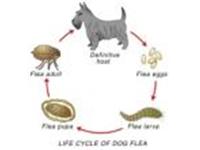
At one time or another, most dog owners will have to deal with fleas. The common flea not only causes your dog discomfort, it also can transmit disease, pass on tapeworms and cause anaemia, especially in vulnerable puppies and older dogs.
Regularly inspect your dog for any signs of fleas. Intermittent scratching, biting and gnawing, plus evidence of flea dirt between your dog’s back legs or on top of his rump, are telltale signs of fleas. If your dog is constantly biting and gnawing himself or you can actually see fleas, you’ve got a full-blown infestation. To check out your dog for fleas, stand him in a bathtub and vigorously rub your hands through his fur. If little dark dots fall on the tub floor, they’re likely either fleas or flea “dirt” (excrement). You’ll know you’ve got fleas if the “dirt” turns red when you rub it into damp tissue or cotton wool.

Flea Control Myths

Garlic and onion repels fleas? Although feeding garlic or onion will give your dog bad breath, it will have absolutely no effect on fleas. On the contrary, feeding large amounts of onion to dogs can produce toxic reactions.

Brewer’s yeast repels fleas? There is no evidence that feeding your dog brewer’s yeast repels fleas.

Prescription flea-prevention products
These products work by preventing fleas from biting or reproducing. Available only by prescription from your veterinarian, these products are administered in either oral or topical (external) treatments once a month to break the flea’s reproductive cycle:

The oral treatment is usually packaged in pill form and will not kill adult fleas already present on the animal. However, usually within 60 days of initiating treatments, the life cycles are broken and fleas do not reappear.

The topical treatment will kill adult fleas and provide almost immediate relief in addition to preventing eggs from hatching. This is the flea control method of choice, and when used as directed, most owners report dramatic improvements in their pets’ condition.

Looking after your pet’s teeth

image

Cats and dogs need regular dental care. Although pets rarely suffer from dental decay they, like humans, can suffer from gum disease or broken teeth.

The reason that animals suffer less from tooth decay is that their diets are usually low in carbohydrate and their saliva is low in acid which protects the teeth. This is why is not good to give pets chocolates and sweets.

Like their owners pets benefit from regular brushing and a trip to the pet dental hygenist to keep teeth and gums healthy.

Periodontal disease

Exactly as in humans pets can suffer from periodontal disease, which attacks the gums, bones and other tissue around the teeth and eventually to tooth loss.

This disease starts with a build-up of plaque whch turns to tartar which provides a perfect climate for bacteria to multiply – these are the same bacteria thought to be a contributor to heart disease in humans. Likewise in animals it can aggravate problems for animals. The tartar also causes gum inflammation. Buy pets healthy chews to exercise their gums.

CARING FOR A PETS TEETH

As soon as a puppy or kitten first grows teeth, check that they are growing properly and are not crooked or causing pressure inside the mouth. If necessary ask your vet to look the animal over. Some smaller dogs are are more at risk of these problems.

Good oral hygiene for pets includes regular brushing. You may have to get your pet used to having a brush in its mouth. Again you can ask a vet to help teach you how to train your pet to accept this. There are special toothbrushes for pets that can be bought from pet stores.

Like humans if your pet has bleeding gums you should consult a vet.

Female life expectancy falls as women live like men

London: Life expectancy for women has fallen and doctors blame the decrease on unhealthy lifestyles.

Women they say are adopting male lifestyles, smoking and drinking too much alcohol alongside stressful full-time jobs.

A new report from independent think-tank, the Office of Health Economics, says that women are likely to live an extra four and half years longer than men and the gap will continue to close. Their data reveals that a girl born in 2002 had a life expectancy of 80.7 years while a boy born the same year had a life expectancy of 76.2 years – a difference of 4.5 years.

This compared to 1974 statistics when female life expectancy at birth was 75.6 years against 69.2 years – a gap of 6.4 years and the biggest difference since records began in the 19th century.

Male life expectancy is improving as a result of successful new cancer treatments, particular in lung cancer where the death rate has decreased by 50 per cent. While in women deaths have increased by 45 per cent.

Jon Sussex, associate director of the OHE, said the figures revealed a change in women’s lifestyles. While men are giving up smoking in increasing numbers women are drinking in increasing numbers and more likely to be obese. In addition an increasing number of women are in full time employment.

Collagen from executed Chinese convicts used in western beauty products, claims UK newspaper

Bejing: Collagen, harvested from the corpses of Chinese convicts is being sold for use in beauty products in Europe and the US, according to a report in the UK’s Guardian newspaper.

An undercover reporter for the newspaper claims that agents for the company, which cannot be named for legal reasons, is telling potential customers that it is developing collagen for lip and wrinkle treatments from skin taken from prisoners after they have been shot.

The agents say some of the company’s products have been exported to the UK, and that the use of skin from condemned convicts is “traditional” and nothing to “make such a big fuss about”.

Although there are no European regulations to control non-surgical treatments doctors have already warned about the potential risk of infection from collagen harvested from human bodies.

The newspaper says it is unclear whether the products are already available or whether they are still in research. At the same time it said that the company has exported collagen products to the UK in the past and has told customers it is trying to develop other fillers using tissue from aborted foetuses.

When formally approached by the Guardian, the agent denied the company was using skin harvested from executed prisoners. However, he had already admitted it was doing precisely this during a number of conversations with a researcher posing as a Hong Kong businessman.

The agent told the researcher: “A lot of the research is still carried out in the traditional manner using skin from the executed prisoner and aborted foetus.” This material, he said, was being bought from “bio tech” companies based in the northern province of Heilongjiang, and was being developed elsewhere in China.

He suggested that the use of skin and other tissues harvested from executed prisoners was not uncommon. “In China it is considered very normal and I was very shocked that western countries can make such a big fuss about this,” he said. Speaking from his office in northern China, he added: “The government has put some pressure on all the medical facilities to keep this type of work in low profile.”

The agent said his company exported to the west via Hong Kong.”We are still in the early days of selling these products, and clients from abroad are quite sur prised that China can manufacture the same human collagen for less than 5% of what it costs in the west.” Skin from prisoners used to be even less expensive, he said. “Nowadays there is a certain fee that has to be paid to the court.”

Meanwhile, cosmetic treatments, including those with with aesthetic fillers, are growing rapidly in popularity, with around 150,000 injections or implants administered each year in the UK. Lip enhancement treatments are one of the most popular, costing an average of pounds 170.

Some fillers are made from cattle or pig tissue, and others from humans. The DoH believes that there may be a risk of transmission of blood-borne viruses and even vCJD from collagen containing human tissue. Although there is as yet no evidence that this has happened, the inquiry found that some collagen injections had triggered inflammatory reactions causing permanent discomfort, scarring and disfigurement. In their report, the inquiry team said that if there was a risk, “action should be taken to protect patient safety through regulation”.

While new regulations are to be drawn up, the department is currently powerless to regulate most human-tissue fillers intended for injection or implant, as they occupy a legal grey area. Most products are not governed by regulations controlling medical products, as they are not classified as medicines. They also escape cosmetics regulations, which only apply to substances used on the surface of the skin and not those injected beneath it. The Healthcare Commission is planning new regulations for cosmetic surgery clinics next year, but these will not control the substances used by plastic surgeons.

Hand transplants

A number of plastic surgeons have told the Guardian that they have been hearing rumours about the use of tissue harvested from executed prisoners for several years.

Peter Butler, a consultant plastic surgeon and government adviser, said there had been rumours that Chinese surgeons had performed hand transplants using hands from executed prisoners. One transplant centre was believed to be adjacent to an execution ground. “I can see the utility of it, as they have access and no ethical objection,” he said. “The main concern would be infective risk.”

Andrew Lee of the University of Pitts burgh School of Medicine, who has visited China to examine transplant techniques, said he had heard similar rumours.

Manufacturers of aesthetic fillers said they had seen Chinese collagen products on sale at trade fairs, but had not seen any labelled Chinese-made in the UK. Dan Cohen, whose US-based company, Inamed, produces collagen products, said: “We have come across Chinese products in the market place. But most products from China are being sold ‘off-label’ or are being imported illegally.”

In China, authorities deny that prisoners’ body parts are harvested without their consent. However, there is some evidence to suggest it may be happening.

In June 2001, Wang Guoqi, a Chinese former military physician, told US congressmen he had worked at execution grounds helping surgeons to harvest the organs of more than 100 executed prisoners, without prior consent. The surgeons used converted vans parked near the execution grounds to begin dissecting the bodies, he told the house international relations committee’s human rights panel.

Skin was said to be highly valued for the treatment of burn victims, and Dr Wang said that in 1995 he skinned a shot convict’s body while the man’s heart was still beating. Dr Wang, who was seeking asylum in the US, also alleged that corneas and other body tissue were removed for transplant, and said his hospital, the Tianjin paramilitary police general brigade hospital, sold body parts for profit.

Human rights activists in China have repeatedly claimed that organs have been harvested from the corpses of executed prisoners and sold to surgeons offering transplants to fee-paying foreigners.

Dr Wang’s allegations infuriated the Chinese authorities, and in a rare move officials publicly denounced him as a liar. The government said organs were transplanted from executed prisoners only if they and their family gave consent.

Although the exact number of people facing the death penalty in China is an official secret, Amnesty International believes around 3,400 were executed last year, with a further 6,000 on death row.


Vegan diet better for slimmers

Washington: Low-fat vegan diets are more successful that those including meat, says a new study conducted by Georgetown University Hospitaland George Washington University in the US.

Half the 59 overweight volunteers followed a strictly vegan diet as part of the experiment conducted by Dr Neal Barnard, president of the Physicians Committee for Responsible Medicine.

The remaining half were given food in line with a national programme designed to reduce illness and death from coronary heart disease in the US, which endorses the consumption of low-fat animal products.

Dr Barnard discovered that those on the vegan diet were able to lose weight without feeling hungry. All the women were of post-menopausal age.

Mr Barnard said: “The study participants following the vegan diet enjoyed unlimited servings of fruits, vegetables, whole grains, and other healthful foods that enabled them to lose weight without feeling hungry.

“As they began to experience the positive effects, weight loss and improved insulin sensitivity, the women in the intervention group became even more motivated to follow the plant-based eating plan.”

The journal article also refers to a study of 55,000 women in Sweden which reinforces Dr Barnard’s findings.

Researchers at Tufts University in Sweden found that of the group, 40% of meat-eaters were overweight or obese compared to 25% to 29% of vegetarians and vegans.

Worldwide, vegetarian populations experience lower rates of heart disease, diabetes, high blood pressure, and other life-threatening diseases.

Meanwhile, a new study appearing in September’s Journal of Urology in the States shows that a low-fat, primarily vegan diet may slow the progression of prostate cancer.

Skin roller wrinkle-buster created by leading cosmetic surgeon

Cape Town: The patent pending instrument is designed by Dr. Des Fernandes, a leading South African plastic surgeon and founder of Environ®, International skin care cosmetic house.

The healthier the skin is made from topically applying the products and treatments, the more difficult it is for the active ingredients in the products to penetrate into the skin. This is usually due to the stratum corneum becoming more compact and the epidermis becoming thicker.

The principle behind the Environ® Cosmetic ROLL-CIT™ is that it helps to increase penetration of vitamins into the skin. When applied to the surface of the skin, it creates micro channels in the horny layer (surface) of the skin. This layer is the main obstruction to entry into the skin.

Once this layer has been breached, the vitamins A, C, E and beta-carotene contained in the skin care products can reach into the depths of the skin more effectively than by simply applying the products to the surface.

Regular use of the Environ® Cosmetic ROLL-CIT™ when used in conjunction with active recommended Environ® products can:

• In conjunction with the Environ® skin care products,
may contribute towards skin thickening
• Assists in softening fine lines
• Helps scarring to become less obvious
• Assists in the disappearance of pigmentation marks

Advantages of using the Environ® Cosmetic ROLL-CIT™ are:

• The process stimulates physiological responses
• It can be used by yourself at home or anywhere
• The process is not painful
• There is no damage to the skin
• It can be used on thin skin
• It can be used on all areas of the face, neck and body

Your skin care professional can show you how simple it is to use the Environ® Cosmetic ROLL-CIT™ at home. For the most effective results, the Environ® Cosmetic ROLL-CIT™ should be used directly before and in-between treatments on the DF Ionzyme machine. This will enhance the penetration of the treatments as well as the active vitamin A and vitamin C in the Environ® skin care products.

Side Effects
A slight “tired” look on the face as a result of slight skin swelling. This will subside in approximately 7-10 days.

A possible retinoid reaction, due to the increase in Vitamin A penetration.
Contra-indications
Do not use the Environ® Cosmetic ROLL-CIT™ on the following skin conditions:
Active acne, eczema, severe solar keratosis, skin cancer, raised moles or warts or if you are unsure about using the product.

For more information please contact: roll-cit@environ.co.za

Manufactured for VIVIDA S.A.
Cape Town, South Africa
Product of South Africa, Pat. pending 2000/7409

Product exposed to Gamma ray irradiation min dose 12Kgy with no know contra indications. 6 Month guarantee with proof of purchase in most countries

About Vivida SA

Vivida SA cc is a proudly south african company that is dedicated to active aging health and technology. Vivida SA cc was born in 2001 out of a need to research and develop supplementary products to compliment the Environ Skin Care range and treatments. Vivida manufactures, develops, researches and markets active aging products and techniques, and is known for its cosmetic products that enhance skin care at home; nutritional supplements for active aging and providing surgical instruments and training for cosmetic surgeons.
Vivida’s most successful product to date is the Cosmetic Roll-CIT, currently sold exclusively through Environ stockists world wide. The company has also developed a non invasive surgical technique known as needling. This is becoming a popular surgical procedure alternative to skin laser resurfacing. Its more affordable, less painful, a shorted down time and more cost effective. Vivida is currently developing a range of oral dietary and food supplements such as Colostrum and anti-oxidants.

Contact: www.vivida.co.za